
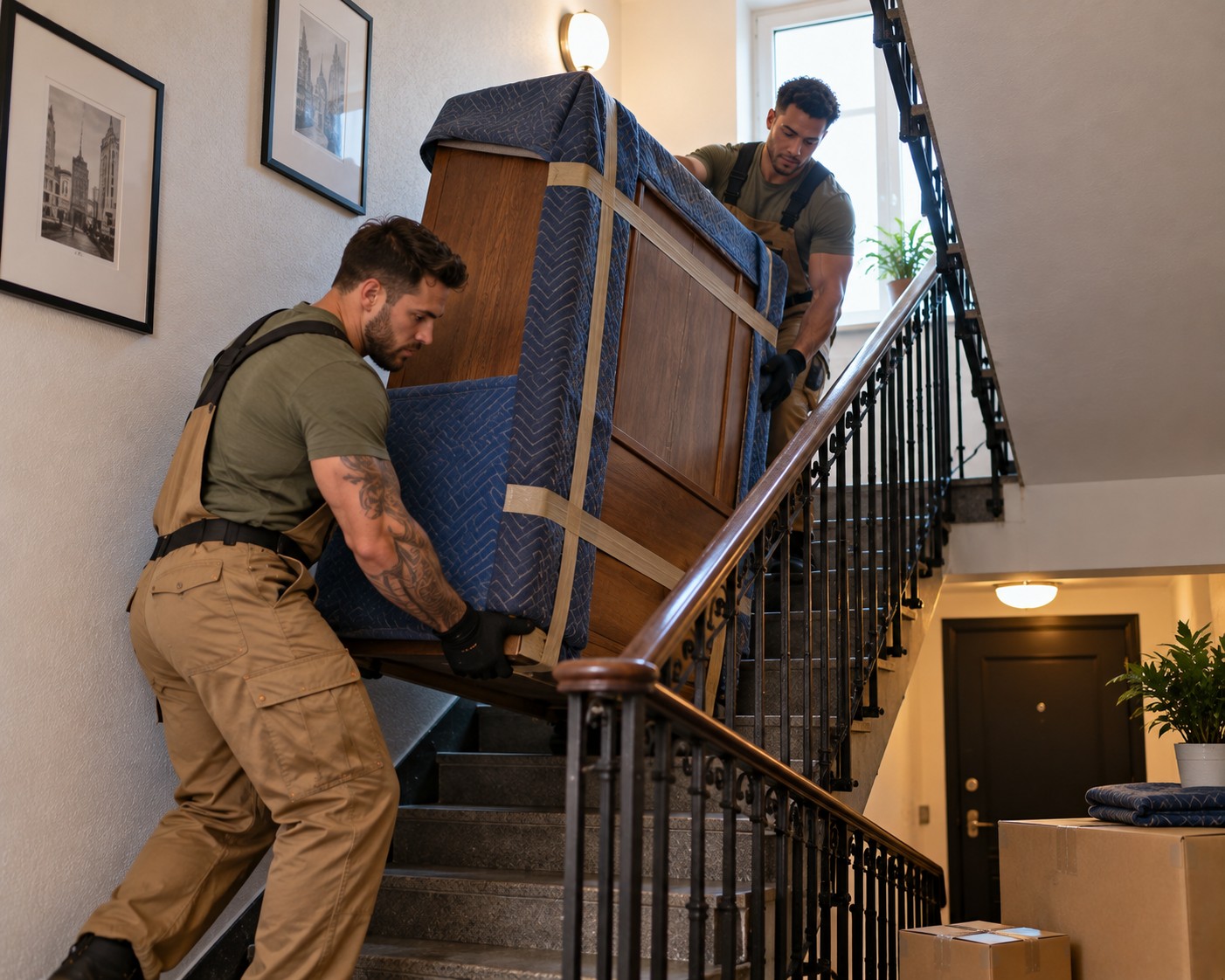
Moving into or out of an apartment can be complicated even when the furniture is modest. Add an oversized sectional, a solid wood wardrobe, or a wide dining table, and a narrow staircase can quickly become the biggest obstacle of the entire relocation. Tight turns, low ceilings, fragile walls, and limited space for lifting require more than strength. They require preparation and precise coordination.
Oversized furniture should never be treated like ordinary boxes. A professional team can evaluate the building, plan the safest route, and determine how each piece should be handled. Pro Movers and Storage, introduced at https://promoversandstorage.com/, can help apartment residents organize difficult moves while reducing the risk of damage to furniture and property.
Examine the Building Before Moving Day
The first step is to inspect the complete route from the apartment to the loading area. Do not focus only on the staircase itself. Every doorway, landing, corridor, elevator entrance, and exterior passage can affect the move.
Measure the Difficult Areas
Important measurements include:
- Staircase width
- Ceiling height above landings
- Doorway clearance
- Hallway length and turning space
- Elevator dimensions
- Distance from the building entrance to the truck
Measure the furniture as well, including its widest and tallest points. A sofa may fit through a doorway but fail at a sharp landing. A wardrobe might clear the stairs but become impossible to rotate near the entrance.
These details help apartment movers decide whether furniture should be carried vertically, tilted carefully, partially disassembled, or moved by another route.
Prepare Oversized Furniture for Tight Access
Large furniture is easier to handle when unnecessary weight and bulk are removed before the move begins. Take out drawers, shelves, cushions, and removable legs whenever the design allows it.
Disassemble Without Losing Hardware
Keep screws, bolts, brackets, and fittings in clearly labeled bags. Attach each bag to the related furniture or place it in a marked hardware container. Photograph complicated connections before taking them apart so reassembly is simpler at the destination.
Doors and drawers should be secured to prevent them from opening during handling. Corners and finished surfaces also need padding to reduce scratches, dents, and contact damage.
For valuable or unusually shaped pieces, https://promoversandstorage.com/services/apartment-movers offers a useful starting point for understanding how apartment relocations can be organized around restricted access, stairs, and building layouts.
Protect the Staircase and Shared Areas
In an apartment building, the furniture is not the only thing at risk. Walls, handrails, flooring, doorframes, and neighboring units may be exposed to accidental contact.
Professional movers can use protective coverings, padded equipment, and controlled lifting techniques to reduce these risks. Before work begins, confirm whether the building requires elevator reservations, moving-hour restrictions, certificates of insurance, or protective padding in common areas.
Communicate With Building Management
Notify the property manager or building staff in advance. Ask about loading zones, parking restrictions, service entrances, and the best time to use shared staircases. If the building has residents moving through the same areas, scheduling can help prevent delays and congestion.
A little coordination before the move often saves much more time once the furniture is already in motion.
Use the Right Equipment and Teamwork
Oversized furniture should be moved with equipment suited to its weight and shape. Depending on the situation, movers may use furniture dollies, lifting straps, ramps, moving blankets, corner protection, or specialized carrying tools.
The number of movers also matters. Too few people can make a large item unstable, while too many people in a narrow staircase can create confusion. Clear communication is essential, especially when one person is guiding movement from a landing or doorway.
Pro Movers and Storage can coordinate apartment moving tasks so that furniture handling, route planning, loading, and placement work together instead of becoming separate improvised efforts.
Know When a Different Route Is Safer
Sometimes the staircase is simply not the right path. A service elevator, wider rear entrance, balcony access, or specialized exterior lifting method may be more suitable, depending on the building and local requirements.
Never force furniture through a route that requires excessive twisting or pressure. A damaged wall, broken railing, or scratched cabinet can cost far more than the time saved by rushing.
Make the Destination Ready
Before the furniture arrives, clear the rooms and measure the final placement areas. Remove rugs, decorations, and small objects that could interfere with positioning. If furniture is being reassembled, leave enough space for movers to work safely.
With careful measurements, suitable equipment, building coordination, and experienced apartment movers, even a relocation involving oversized furniture and narrow staircases can be managed in a controlled way. The key is to solve the access problem before moving day rather than discovering it while carrying a heavy piece halfway down the stairs.